Stainless steel self-adhesive strips are a versatile and modern solution for home improvement, interior design, and DIY projects. They provide a sleek, metallic finish without the need for professional tools or messy glues. Here is a comprehensive guide on how to install them and where they can be used.
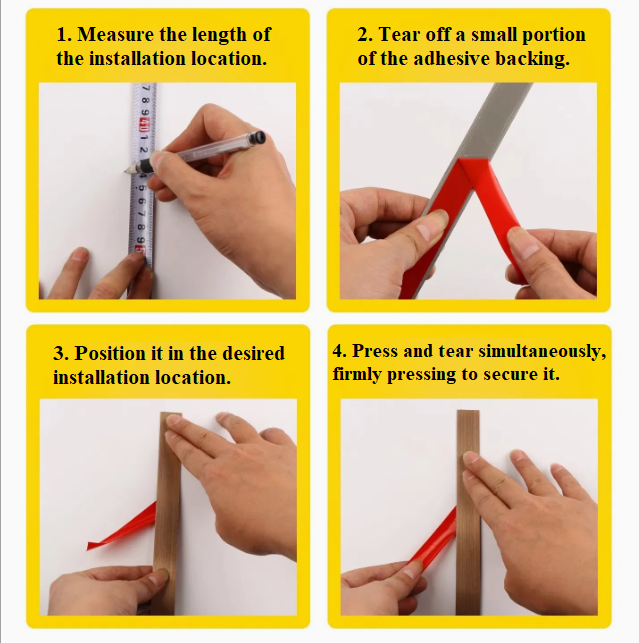
1. How to Install Self-Adhesive Stainless Steel Strips
The installation process is straightforward, but success depends on proper preparation.
1. Surface Preparation: Ensure the surface is clean, dry, and flat. Use a damp cloth and a bit of alcohol to remove any grease, dust, or wax. This is the most critical step for long-term adhesion.
2. Measuring and Cutting:Measure the area where the strip will be applied. Use heavy-duty metal shears or a hacksaw to cut the strip to the desired length.
3. Peeling the Backing:Carefully peel off the protective film from the adhesive side (usually 3M tape). Avoid touching the adhesive with your fingers, as skin oils can weaken the bond.
4. Application: Align the strip precisely. Once it touches the surface, the adhesive bonds quickly. Press firmly along the entire length of the strip for about 30 seconds to ensure full contact.
5. Remove Protective Film:Most strips come with a thin plastic film on the "shiny" side to prevent scratches during transit. Peel this off after installation to reveal the mirror or brushed finish.
2. Common Application Scenarios
Because of their durability and aesthetic appeal, these strips are used in various settings:
Wall Decoration:Use them as "inlays" between tiles or as decorative borders on painted walls to create a luxury, hotel-like atmosphere.
Cabinet and Furniture Upgrades: Apply them to the edges of old wardrobes, cabinets, or desks to give them a modern, "tech" look.
Ceiling Accents:They are frequently used to create geometric patterns on ceilings, replacing traditional plaster moldings for a more contemporary feel.
Mirror and Door Framing:They work perfectly as a frame for frameless mirrors or as an accent line on flat-panel doors.
Floor Transitions: In low-traffic areas, they can serve as a transition strip between different flooring materials.
3. Pro Tips for Best Results
Temperature Matters: If you are installing in a cold environment, use a hairdryer to slightly warm the adhesive tape before applying; this makes the glue more "tacky."
Avoid Curves: While these strips are slightly flexible, they are best suited for straight lines. Attempting to bend them around tight corners may cause the adhesive to pop off over time.
Wait Before Cleaning: Let the adhesive cure for at least 24 hours before using any cleaning agents on or around the strip.
Stainless steel self-adhesive strips are a versatile and modern solution for home improvement, interior design, and DIY projects. They provide a sleek, metallic finish without the need for professional tools or messy glues. Here is a comprehensive guide on how to install them and where they can be used.
1. How to Install Self-Adhesive Stainless Steel Strips
The installation process is straightforward, but success depends on proper preparation.
1. Surface Preparation: Ensure the surface is clean, dry, and flat. Use a damp cloth and a bit of alcohol to remove any grease, dust, or wax. This is the most critical step for long-term adhesion.
2. Measuring and Cutting:Measure the area where the strip will be applied. Use heavy-duty metal shears or a hacksaw to cut the strip to the desired length.
3. Peeling the Backing:Carefully peel off the protective film from the adhesive side (usually 3M tape). Avoid touching the adhesive with your fingers, as skin oils can weaken the bond.
4. Application: Align the strip precisely. Once it touches the surface, the adhesive bonds quickly. Press firmly along the entire length of the strip for about 30 seconds to ensure full contact.
5. Remove Protective Film:Most strips come with a thin plastic film on the "shiny" side to prevent scratches during transit. Peel this off after installation to reveal the mirror or brushed finish.
2. Common Application Scenarios
Because of their durability and aesthetic appeal, these strips are used in various settings:
Wall Decoration:Use them as "inlays" between tiles or as decorative borders on painted walls to create a luxury, hotel-like atmosphere.
Cabinet and Furniture Upgrades: Apply them to the edges of old wardrobes, cabinets, or desks to give them a modern, "tech" look.
Ceiling Accents:They are frequently used to create geometric patterns on ceilings, replacing traditional plaster moldings for a more contemporary feel.
Mirror and Door Framing:They work perfectly as a frame for frameless mirrors or as an accent line on flat-panel doors.
Floor Transitions: In low-traffic areas, they can serve as a transition strip between different flooring materials.
3. Pro Tips for Best Results
Temperature Matters: If you are installing in a cold environment, use a hairdryer to slightly warm the adhesive tape before applying; this makes the glue more "tacky."
Avoid Curves: While these strips are slightly flexible, they are best suited for straight lines. Attempting to bend them around tight corners may cause the adhesive to pop off over time.
Wait Before Cleaning: Let the adhesive cure for at least 24 hours before using any cleaning agents on or around the strip.